
How does income investing compare to growth investing?
FAQ 40

Curious about achieving financial freedom? Let's chat! Click here to get in touch!
Have an opinion on our content? We're all ears! Comment your thoughts below.
"In investing, what is comfortable is rarely profitable."
This quote, often attributed to Robert Arnott, highlights the tension between two fundamental approaches to investing: income and growth. In this edition of the newsletter, we'll explore these contrasting strategies, helping you understand the nuances and make informed investment decisions.
Income vs. Growth Investing - A Fundamental Division
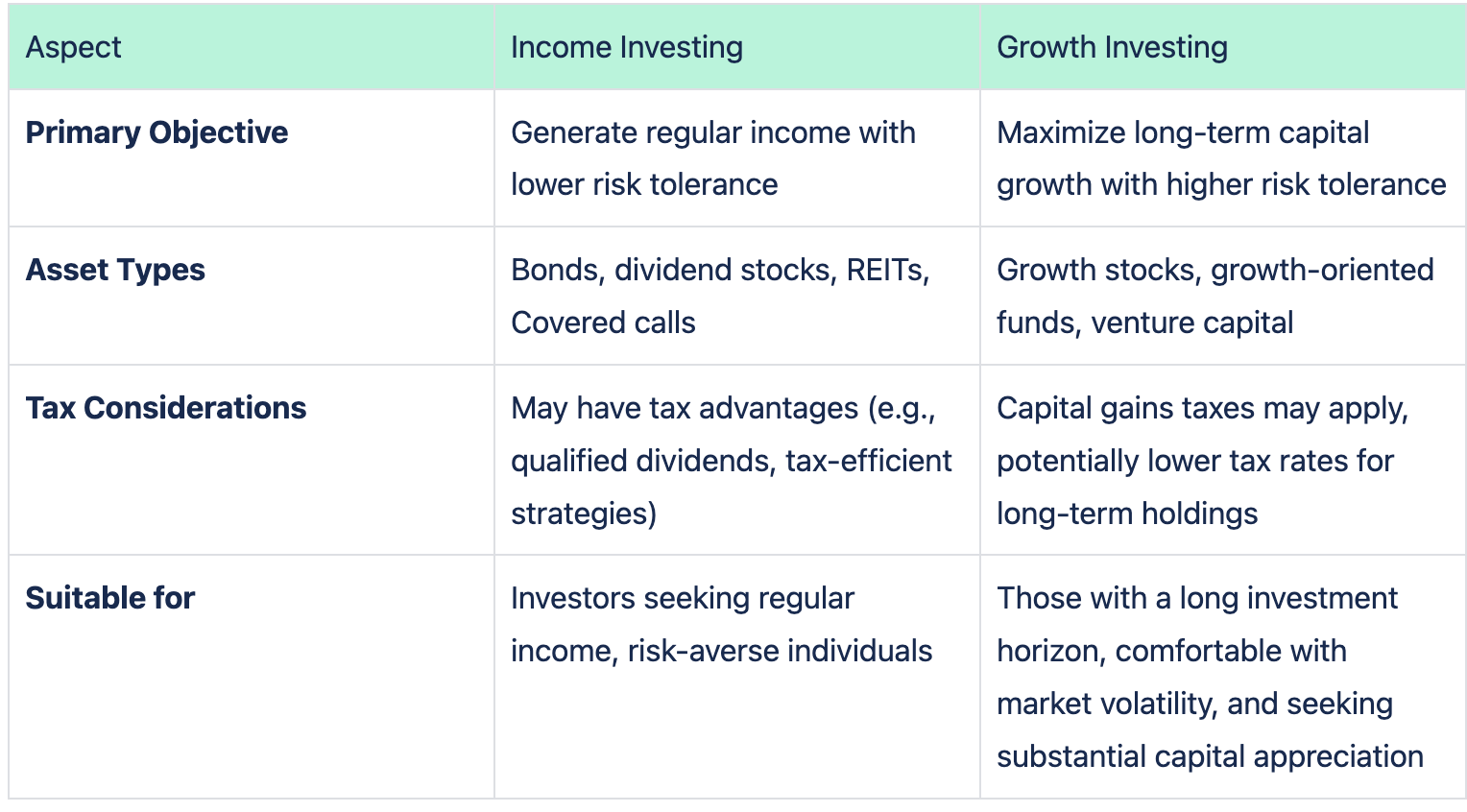
Income Investing: This strategy emphasizes generating a consistent stream of income from investments. Income investors seek assets that pay dividends, interest, or rental income. It's a popular choice for those looking to supplement their current income or create a reliable source of cash flow.
Growth Investing: Growth investors, on the other hand, prioritize capital appreciation over immediate income. They focus on stocks or assets expected to increase in value over time. While growth investing can lead to substantial gains, it often involves a higher level of risk.
Income Investing
Example of Bonds: (please refer to our introduction to bonds investing)
U.S. Treasury Bonds: Considered one of the safest bond investments, they provide a fixed interest rate and are backed by the U.S. government.
Corporate Bonds: Bonds issued by companies like Microsoft or Coca-Cola, offering regular interest payments.
Examples of well-known Dividend Stocks:
Johnson & Johnson (JNJ): A well-established company with a history of consistent dividend payments.
