
Charting Your Financial Course: Why Set Goals for 2024?
FAQ 67


Exploring the path to financial freedom as a community. Reach out by clicking here!
How do you like the content? Please let us know in the comments below.
As we embark on a new year, it's the perfect time to reflect on our personal and professional aspirations. While many of us set resolutions for health and wellness, it's equally important to consider our financial well-being. Setting financial goals is not just a good practice; it's an essential tool that can guide you towards a secure and prosperous future.
The Importance of Sticking to Your Goals
Setting financial goals is a proactive step toward securing your financial future, but the real magic happens when you commit to sticking with those goals throughout the year. It's not uncommon for individuals to set goals in January only to revisit or revise them later in the year. However, by maintaining consistency with your objectives, you gain a clearer perspective on your financial trajectory. Goals act as checkpoints, allowing you to assess whether you are on track or if adjustments are needed to align with your long-term vision.
How Goals Help You
Financial goals are more than just numbers on paper; they are the building blocks of a robust financial plan. They provide motivation, focus, and a sense of purpose to your financial decisions. Whether you aim to purchase a home, fund your children's education, or build a retirement nest egg, setting specific and measurable goals empowers you to make informed choices that align with your aspirations.
Factors to Consider When Setting Goals
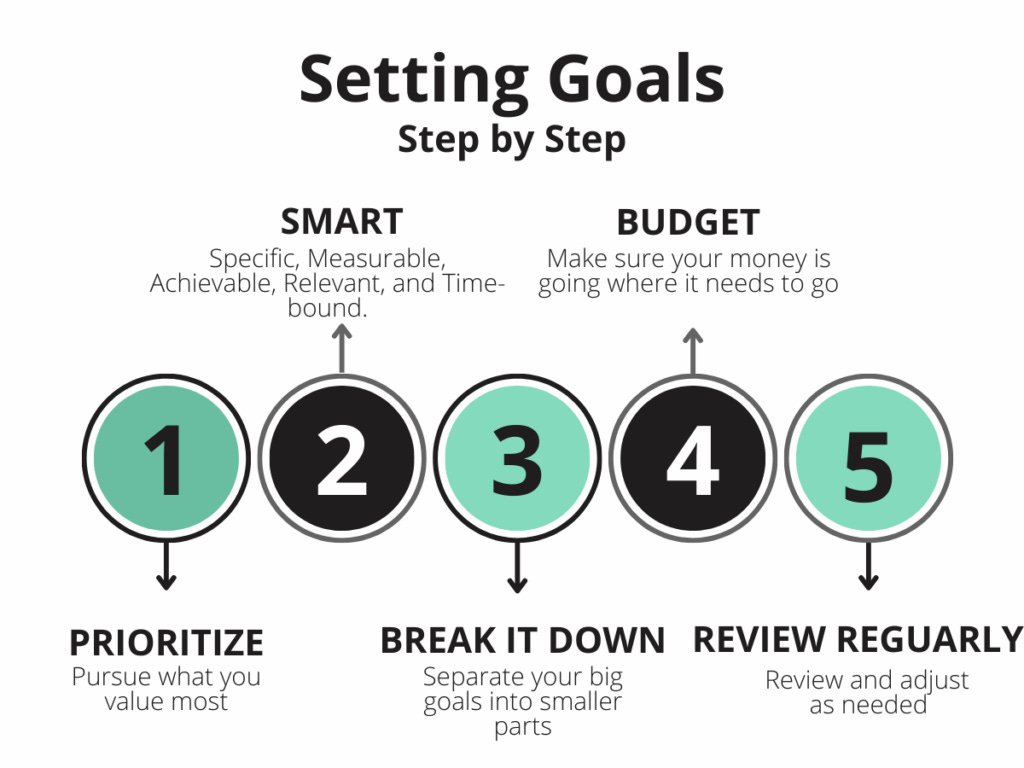
Setting financial goals requires a thoughtful consideration of various factors. Assess your current financial situation, including income, expenses, and debts. Consider short and long-term needs such as education and retirement. Factor in risk tolerance, time horizon, and potential tax implications. Tailoring goals to these considerations ensures they are not only realistic but also aligned with your unique financial circumstances and aspirations.
Additionally, as an Immigrant investor, you may have specific considerations such as managing taxes efficiently, investing in both the US and your home country, and planning for potential currency fluctuations.
Example: Navigating Market Volatility - The 2008 Financial Crisis Revisited
Picture navigating the 2008 financial crisis with a retiree armed with clear financial goals. By diversifying their investments across various assets, from bonds to real estate, they could have shielded their wealth from the downturn, ensuring a more secure retirement.
